In 1996 BT commissioned us to build the cameras for the yachts in the BT Global Challenge, a round-the-world race sailed against the wind. We were Eastern Video then; the work became Extreme Video in December 1998. This is what we built, and where to see the pictures.
Fourteen identical steel yachts left Southampton on 29 September 1996, sailed by amateur crews. The route went west, against the prevailing winds and currents: Rio de Janeiro, Wellington, Sydney, Cape Town, Boston, and home to Southampton in July 1997.
The job came to us directly from BT at Martlesham Heath, near Ipswich. By then we had been putting cameras on rally cars and powerboats for several years.
This was Eastern Video work. Eastern Video was Jonathan Thursby’s Norwich business, and it did all the camera work until the limited company, now Extreme Video, was registered in December 1998.
The camerasWHAT WE BUILT
Pan, tilt, zoom and a level horizon.
We designed and built the remote-control cameras for the race yachts: waterproof three-chip cameras on specially engineered mounts, fixed outside on the boat, with pan, tilt, zoom and horizon levelling.
A yacht is never level. Horizon levelling let the operator bring the picture back upright as the boat heeled. We believe it was the first horizon-levelling camera system fitted to ocean racing yachts.
The crews ran the cameras from a single unit that combined the monitor, the recorder and the controls. The cameras themselves were built for extended use in severe weather.
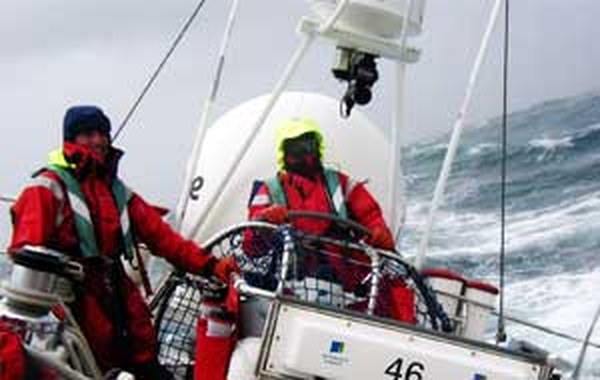
From our archive: the helm in heavy seas, with one of the cameras mounted above the crew.
RemoteFROM BT’S LAB
Controlled from Martlesham.
The cameras were not only run from on board. BT could control them from its development lab at Martlesham Heath, wherever the yachts were in the world.
1996/97 was the only Global Challenge we built cameras for.
The filmFROM THE RACE
Pictures from our cameras.
This short film was made by The Challenge Business and BT to promote the race. It includes pictures from our cameras in the Southern Ocean.
The race was covered on BBC Two as The World’s Toughest Yacht Race ↗, with Tony Rayner as series producer. These are the Radio Times listings for each programme.
The BBC Programme Index may ask you to confirm you are not a robot before it opens a listing.
AfterwardsWHAT IT LED TO
From yachts to oil wells.
The yacht cameras came from the same thinking as the rally and powerboat rigs: keep the water out, keep the picture steady, make it simple to run. In 2000 Jonathan took that offshore and down oil wells with a separate company, EV Offshore.